Quick Answer
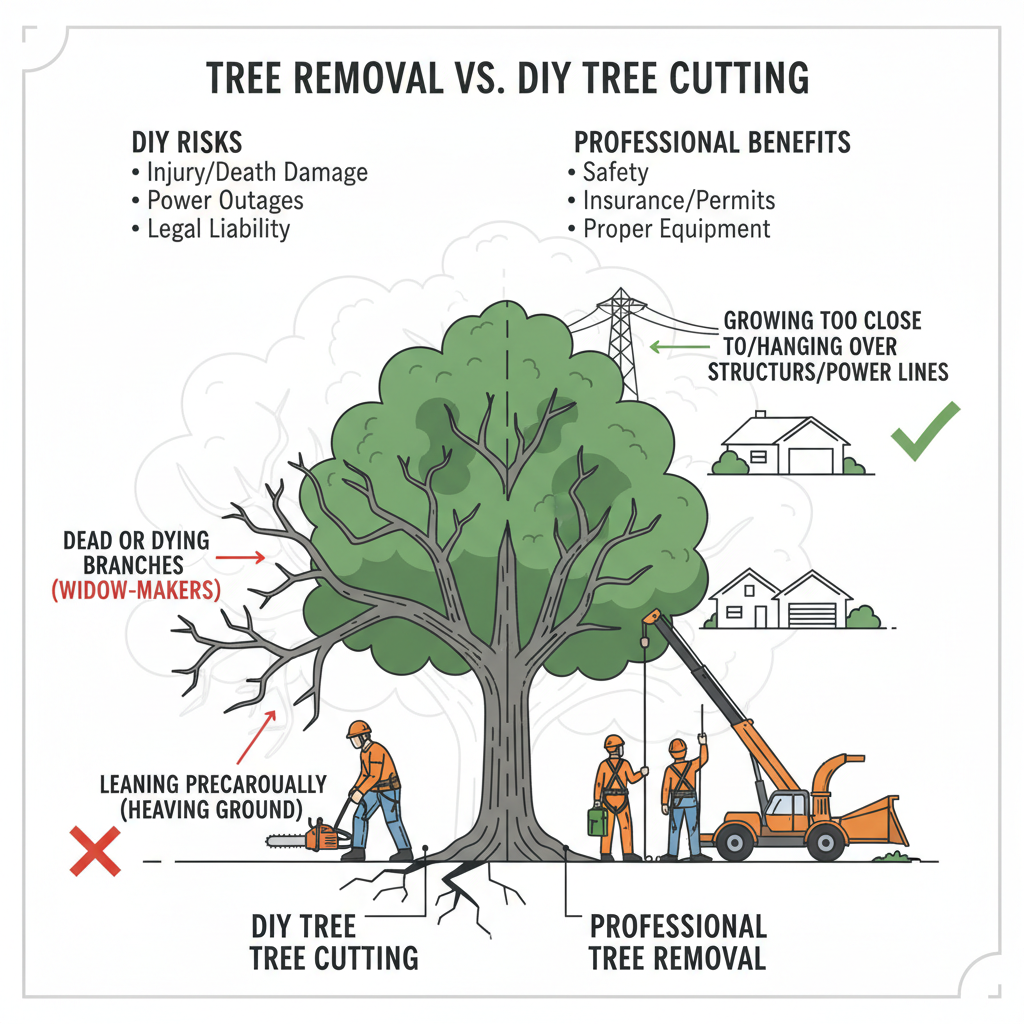
Okay, here's the quick version. Trimming a few small branches you can reach from the ground? Go for it. But for anything bigger than your thigh, especially near your house or power lines, you're playing with fire. Seriously. A professional crew has the insurance, experience, and heavy-duty gear to do it safely. A DIY job gone wrong can cost you ten times what a pro would've charged, and that's not even counting a trip to the ER. Don't be a hero. Be smart.
Common Symptoms
Possible Causes
Step-by-Step Diagnosis
Step 1
Really look at the tree. Note any lean, its direction, and any dead branches hung up in the canopy.
Step 2
Measure the fall zone. You need a clear space that's at least the height of the tree in every direction.
Step 3
Check for wires and utilities. Look up for any power or cable lines and call 811 to have underground lines marked.
Step 4
Judge the size. If the trunk is thicker than your arm or the tree is taller than your house, it's a pro job.
Step 5
Call your city hall to check for local laws or permit requirements before you cut anything.
Step 6
Do a gear and gut check. If you don't have the right safety gear and years of experience, that's your answer.
DIY vs Professional Costs
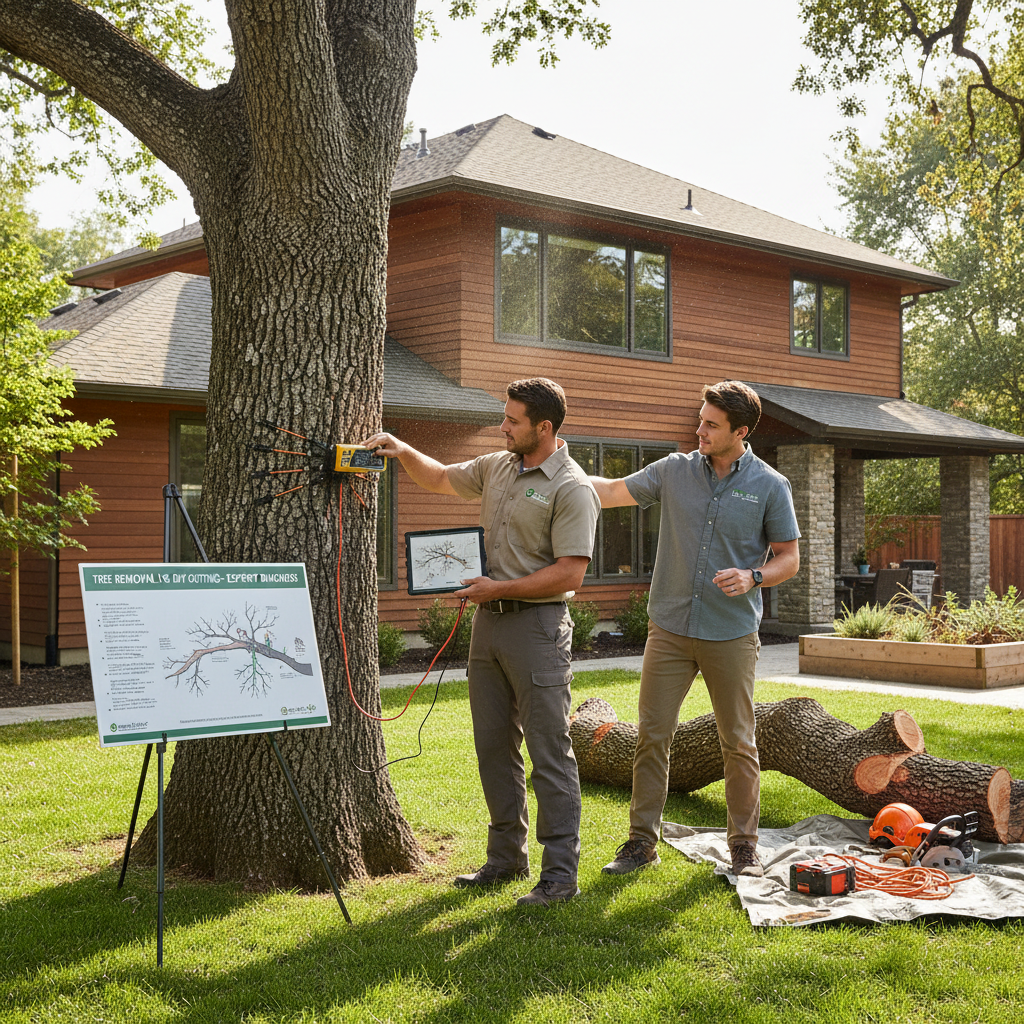
| Repair Type | DIY Cost | Professional Cost | Time Required |
|---|---|---|---|
Small Branch Trimming (from the ground) | $20-$100 | $150-$400 | 1-2 hours |
Small Tree/Big Shrub Removal (<15 ft) | $150-$300 | $300-$800 | 2-4 hours |
Medium to Large Tree Removal (>20 ft) | N/A - Don't do it. | $500 - $10,000+ | 4-8+ hours |
Stump Grinding | $150-$250 | $100-$500 | 1-2 hours |
When to Call a Professional Tree Service
- The tree is near any building, structure, fence, or power line.
- The tree is huge. If the trunk is thicker than your leg or the tree is taller than your house, don't touch it.
- The tree is dead, diseased, visibly rotting, or storm-damaged.
- The tree is on a slope, in a tight spot between structures, or has a significant lean.
- You don't have the full range of professional safety gear (chaps, helmet, etc.) and years of experience using a chainsaw to fell trees.
Prevention Tips
- Prune trees when they're young to guide their growth and remove problematic branches while they're small.
- Give trees plenty of space when planting; don't plant a future giant five feet from your house.
- Walk your yard and inspect your trees every few months to catch problems like dead limbs or disease early.
- Water your trees deeply during droughts to keep them healthy and less prone to stress and damage.
Frequently Asked Questions
Related Guides
Tree Removal vs. DIY Tree Cutting (Troubleshooting & Fixes)
Thinking about cutting down that tree yourself? As a guy who's seen it all go wrong, here's my honest take on when to DIY and when to call a pro.
Deciding between DIY tree care/removal and hiring professional tree services, considering costs, risks, and benefits. Troubleshooting & Fixes
Deciding on DIY Tree Work vs. Hiring a Pro (My Two Cents)
A veteran tech's brutally honest guide on DIY tree trimming vs. calling a pro. Learn when to save a buck and when you're risking your life and your house.
DIY Tree Work vs The Pros: When to Call for Backup (A Reality Check)
Thinking of DIY tree work? A 25-year vet explains the risks. Learn when to tackle it yourself and when calling a pro is the only smart move.
Neglecting Tree Maintenance vs. Professional Tree Services Troubleshooting & Fixes
Unexplained tree decline, leading to visible signs of distress or death in trees without an obvious cause. Troubleshooting & Fixes
Is your tree just not looking right? A veteran arborist explains how to diagnose vague symptoms like leaf yellowing or thinning canopy and when to call for help.
Need Professional Help?
Find top-rated tree service experts in your area